Hawkmoths of Brazil by Alan Martin
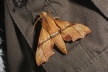
IDENTIFICATION KEY: ISOGNATHUS
See also the Photo Gallery or Pinned Specimens or General Information
1. Small mostly brown Isognathus
I. allamandae female: more pointed wings than australis and with a smaller and more clearly defined dark marginal band to the hindwing.
Wing (male and female): 27-
I. allamandae male: similar to female but with two narrow black forewing dashes.
I. australis female: shorter and broader forewings than allamandae. The dark hindwing marginal band is broader and less uniform in width than allamandae. Note also the pale post-
Wing (male and female): 26-
I. australis male: similar to female but with two short thick black forewing dashes.
2. Larger mostly brown Isognathus
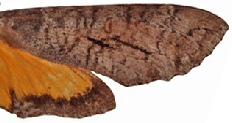
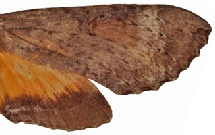
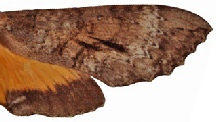
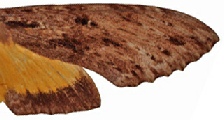
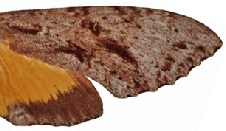
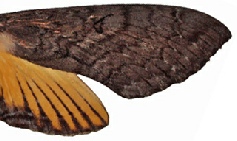
I. leachii: generally darker forewings than swainsonii and with narrower and more uniform width hindwing marginal bands. The forewing dashes can be quite broad and extensive.
Wing: 37-
I. swainsonii: the classic swainsonii have generally paler forewings than leachii with more white scaling visible, and the dark hindwing marginal band is wider and less uniform in width.
I. brasiliensis: recently split from swainsonii and only occurring in south-
Wing: 35-
I. scyron: thorax and forewings russet-
Wing: 30 -
I. mossi mossi: generally dark body and wings, with shorter rounded forewings. Found only in the North of Brazil.
Wing: 36-
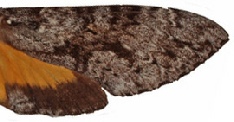
I. menechus: distinctive broad forewing dash in the shape of an uneven stretched letter ‘m’ or ‘n’.
Wing: 35-
I. excelsior: distinguished from all other Isognathus species by the pure white underside to the abdomen. Found only in the North of Brazil.
Wing: 41-
I. occidentalis: similar to excelsior but with a pale brown underside to the abdomen rather than white. Found only in the North of Brazil.
Wing: 42-
3. Heavily patterned and dark Isognathus
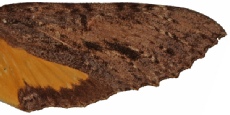
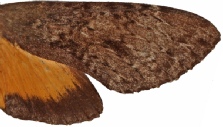
I. caricae caricae: unmistakable with very dark forewings and yellow hindwings with black veins.
Wing: 38-
4. Isognathus with black hindwing veins