Hawkmoths of Brazil by Alan Martin
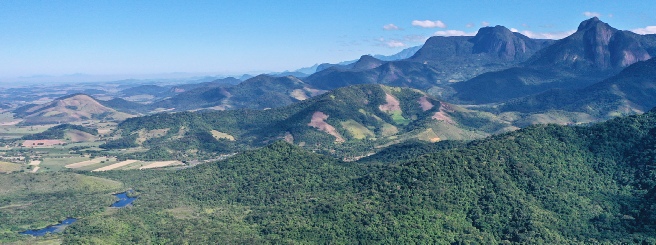
The Reserva Ecológica de Guapiaçu (REGUA)
The Reserva Ecológica de Guapiaçu (REGUA) is located in the Serra dos Orgaos about 70 kilometres north of Rio de Janeiro and was established as a private non-
Whilst the prime objective has been to provide protection from deforestation, hunting and exploitation of forest products, REGUA has also been working to restore areas that have been damaged through poor land management in the past. In the years to the end of 2020 over 620,000 saplings grown from seeds collected in the forest have been planted, and a 45 acre wetland has been re-
Right from the start, REGUA realised that its conservation work could never succeed unless the local residents supported and understood the importance of protecting the unique and threatened environment in which they live. REGUA employs a part-
By the end of 2020, 485 bird species including 61 endemics to Brazil and 117 endemics to the Atlantic Rainforest have been observed within the reserve boundaries, and these include 12 species classified as ‘Threatened’ and 26 as ‘Near-
Whilst the early research at REGUA was largely focused on birds, subsequent studies on a wide range of species from arachnids to zooplankton have confirmed the quality and range of biodiversity found in the major forest blocks and the wetlands. REGUA’s location close to Rio, and its excellent study facilities make it a an ideal place to conduct field research and consequently REGUA has developed excellent working relationships with both Rio and Sao Paulo Universities. There is now a wide range of research projects in progress, from establishing detailed inventories of the many taxonomic groups found in the reserve, to more complex and long-
Most of the funding for the project has come through two UK-
Further information on REGUA and details of how to visit the reserve can be found at www.regua.org.